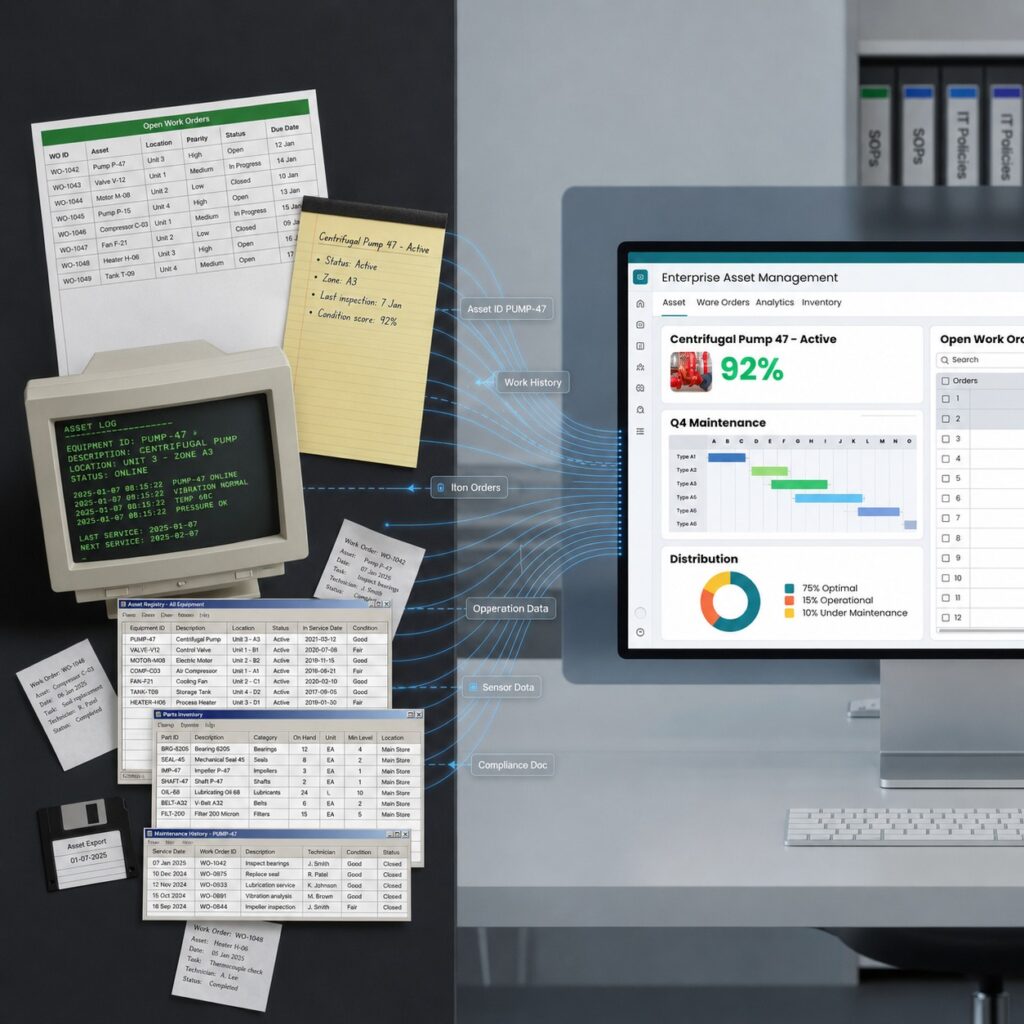
Enterprise Asset Management (EAM) 101: A Comprehensive Guide to Selecting the Best Platform for Your Operations
Introduction
Just as an e-commerce brand can’t survive across multiple sales channels without a single source of order truth, an asset-intensive enterprise cannot maintain profitability, safety, or scale with fragmented infrastructure tools.
Managing capital assets across diverse manufacturing plants, distribution grids, or heavy equipment fleets has grown immensely complex. Today, an effective Enterprise Asset Management (EAM) system is no longer just a digital logbook for repairs. It is a critical operational ecosystem that unifies engineering data, automated scheduling, and artificial intelligence to prevent failures before they impact your bottom line.
If your team is currently fighting aging systems, data siloes, or skyrocketing maintenance costs, this comprehensive guide outlines exactly what a modern EAM platform should do and how to pick the right one for your business.

What is a Modern EAM System?
At its core, an EAM system tracks, manages, and optimizes the lifecycle of physical assets and infrastructure from initial procurement to final decommissioning.
However, much like modern Order Management Systems (OMS) shifted from simply tracking sales to intelligently routing fulfillment, next-generation EAM platforms have evolved into automated orchestration engines. They bridge the historical gap between information technology (IT) and operational technology (OT), collecting real-time equipment telemetry to shift your organization from reactive firefighting to proactive, automated preservation.
4 Non-Negotiable EAM Capabilities to Look For
When evaluating potential solutions, do not settle for standard maintenance checklists. Look for these four strategic capabilities that separate modern infrastructure suites from yesterday’s rigid legacy software:
1. Centralized Lifecycle Orchestration
Your platform must aggregate asset health information across every single facility and asset type into one single dashboard. Whether managing field transit fleets, HVAC arrays, or production assembly lines, your team needs real-time, vendor-agnostic visibility into current status, service history, and replacement costs.
2. IoT & OT Telemetry Data Intake
An EAM system shouldn’t wait for a human technician to log an entry. It must ingest live data feeds directly from your machinery, SCADA systems, or IoT sensors. This continuous monitoring enables the platform to automatically detect operational exceptions and sound the alarm long before an explicit outage happens.
3. Intelligent Work Order & Resource Optimization
The system should automatically trigger, assign, and route work orders based on live asset state rather than simple calendar dates. It should automatically verify that the selected dispatch crew has the right safety certifications, parts, and manuals to get the job done right the first time.
4. Deep Native Analytics and Compliance Reporting
With stringent environmental, safety, and operational regulations across industries, your platform must provide accurate, audit-ready data. Choose a system that generates interactive, historical reports on asset trends, costs, and compliance metrics at the click of a button.
Top Business Benefits of Upgrading to a High-Performance EAM
When you untangle your operations and implement a truly modern asset management strategy, the return on investment surfaces across your entire corporate balance sheet:
Drastically Lower Operating Costs: Eliminates waste by ordering maintenance and MRO parts precisely when they are required, avoiding unnecessary inventory storage fees.
Maximized Asset Lifespan: Extends the usable lifespan of your aging, high-value capital infrastructure through optimized maintenance rhythms.
Zero-Downtime Reliability: Keeps production lines moving and services running by stopping catastrophic failures in their tracks.
Optimized Crew Utilization: Provides stressed internal teams with the exact technical blueprints, safety steps, and structural data required for each task, maximizing their efficiency.

Conclusion & Next Steps
Choosing an EAM is an architectural decision that defines your enterprise’s operational efficiency for years to come. Settling for basic capabilities or burying your operations inside rigid corporate software extensions will inevitably introduce a severe “complexity tax.”
Ready to see how a unified asset framework can streamline your infrastructure? Read the next post in our selection series: [9 Critical Tips for Choosing an Enterprise Asset Management System] or reach out to the engineering experts at Perfaware today for a tailored operational assessment.
Spread the knowledge.
Author Details
Ranjith Maniyedath
Managing Partner
Want to know how Maximo stacks up against the leading EAM competitors?
Drop your details in the form to get instant access.